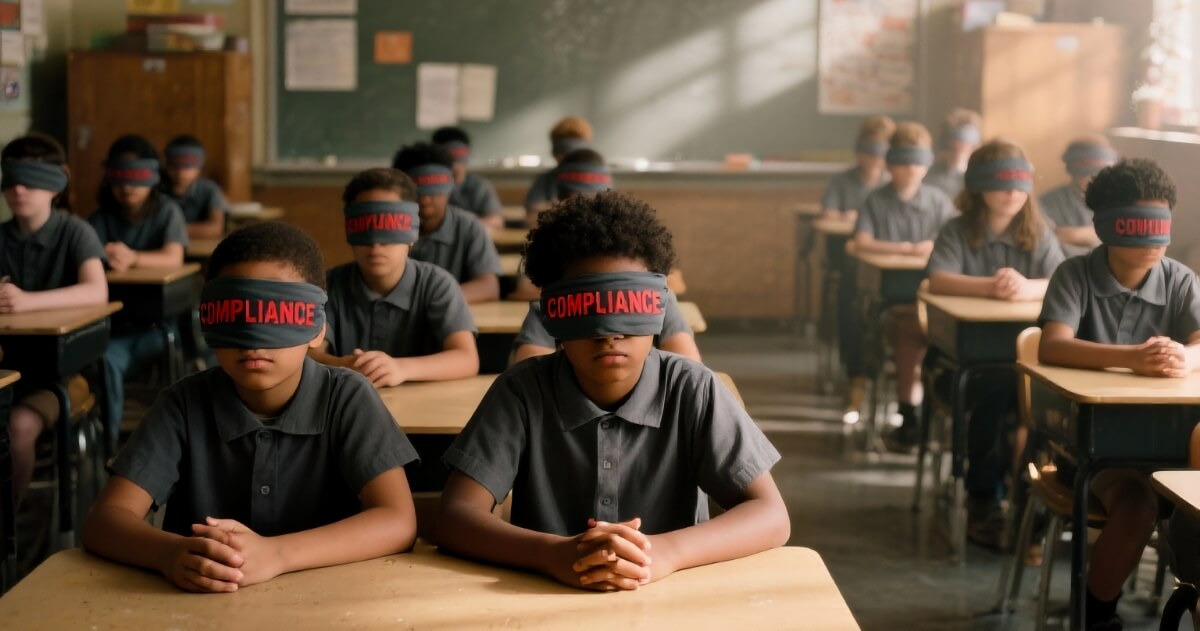
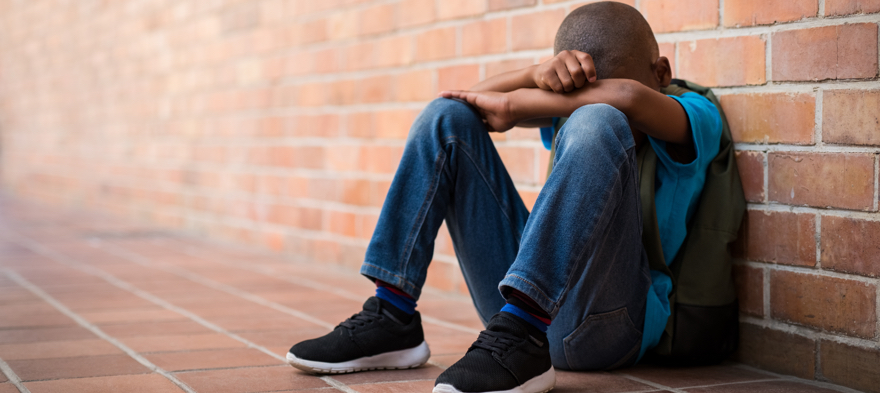

When I see how over-represented kids of color are in suspensions just about everywhere, I think about what kinds of implicit bias teachers are carrying about those students. I think about unnecessary power struggles and cultural misunderstandings around what constitutes engagement and disrespect. I’ve seen students sent to the office for responding verbally during a movie in class, only to be suspended minutes later when they refused to sit down in the principal’s office.
I think about hyper-enforcement of rules, and how that enforcement seems too often to be directed at marginalized populations. I think about 6-year-old girls, arrested for having a “tantrum” at school, and think of how many adults that day saw that same little girl as bigger, older, more dangerous, more violent than she is.
This part of this work is on us, fellow teachers. I know I’m not perfect. I know, especially when I’m tired or frustrated, I can be part of the problem. I know I try to be mindful of who I am noticing in my room and why I am noticing them. I try to remember that the loud kids are often more on task than the quiet ones, that kids don’t always have the language to tell us what they are feeling, so those messages can come at us sideways or backwards. I try to remember to breathe and listen before I demand and punish. We can do better. It will take hard work on ourselves and our cultures and systems, but we can do better.
Another part of the work on lowering suspensions, a part that is only starting to happen around the country, is focusing on helping the students who need it before something happens that is suspension-worthy or providing supports after. We have some ideals and leaders to look towards, and many are based on trauma-informed practices and schools.
My immediate region houses two giant school districts (Minneapolis and St. Paul), as well as a good number of rather large (and some rather tax-rich) suburban districts. Everyone tends to work in their own little silos in their own corners of these districts, but imagine if we all worked together on this?
Let’s Create Real Alternatives to Out-of-School Suspension
Imagine if there was a central place, or central programming, designed to work as support for growth in lieu of home suspensions. Programming centered on substance abuse and addiction (we could have a whole team of vaping specialists), on gang interventions, on anger management, on interrupting cycles of trauma. There could be mental health care for kids who really needed it, social workers to help kids and families who are struggling, mediation services, tutoring.
We wouldn’t need to force it. Families could be given the option of a home suspension or a van that will come get the student for whatever time made sense to get help, to help themselves, in an environment created for that purpose.
It would cost money. There isn’t enough. I don’t have an answer for that beyond knowing that we need our schools to do more, and they need the money to do it. [pullquote position=\”right\”]I don’t have an answer beyond knowing that young people need our help and we shouldn’t hesitate to fund them.[/pullquote] I know every single district could use a resource like it, and doubt any one of them could pay for it alone.
I know suspensions are not the answer. I know that forcing those numbers down doesn’t do enough for enough kids. I know we need to admit failure. We should be furious and deeply embarrassed every time we handcuff a kid, every time we punish them for being homeless or addicted or angry or unwell. I know the faces of those kids, the ones who needed more from the adults around them, who deserve more from their schools than what they got.
“,”_content”:”field_63ed62412def1″,”bottom_margin”:”yes”,”_bottom_margin”:”field_63ed625c2def2″},”mode”:”preview”} /–>