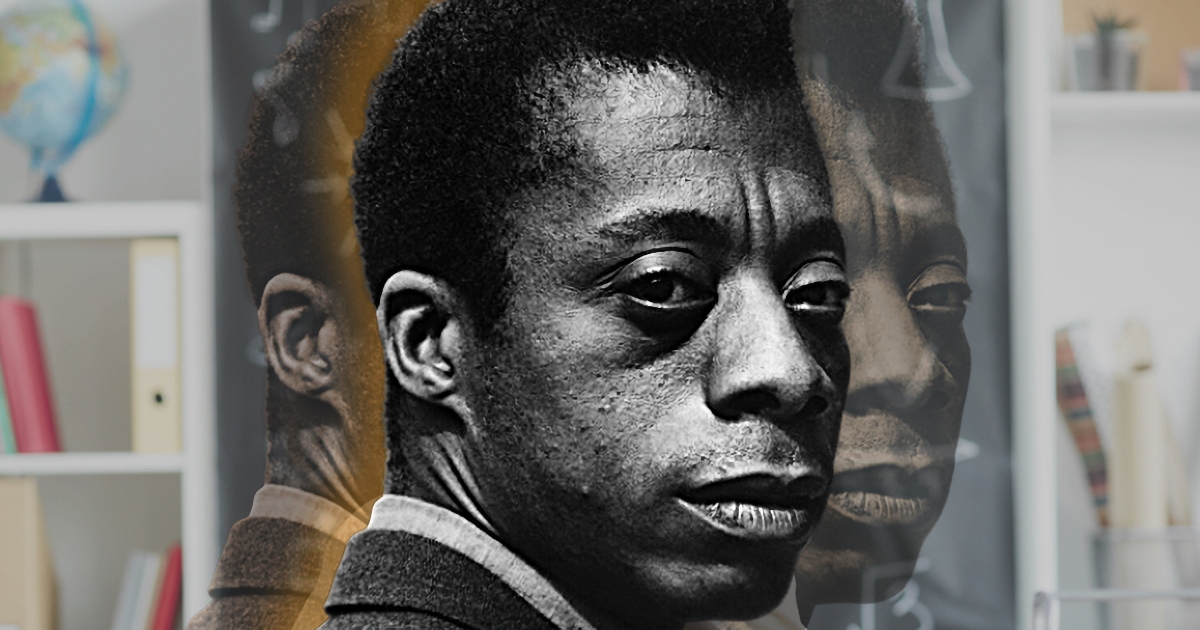

As James Baldwin began his speech, “Let’s begin by saying that we are living through a very dangerous time,” and our children are watching history unfold right in front of them. I begin to think about my responsibility as an educator in America. As a cisgender person of color, Latino, who is of Dominican descent, I see the struggles and fight for freedom that lie ahead.
My curiosity brings me to wonder— are white educators prepared for this fight toward liberation and freedom?
I am aware that 82% of teachers in America are white — teachers who play a critical role in developing the critical consciousness of our Black and brown youth. This responsibility falls on white teachers to not only educate our children but also to educate themselves about privilege and cultural competence.
The story of Black and brown bodies is not just one of oppression and struggle, but rather one of liberation and freedom fighting. And educators have a responsibility to begin empowering the consciousness of students through these stories. Now more than ever, educators must join this movement of freedom and create educational experiences around social democratic values.
The educational experience is not just about standardized testing and performance, it is a place for students to become holistic individuals who are cared for and protected.
Students who build this sense of community and empathy will lead the change in our society in the face of injustice.
- Scholar and Activist Paul Ortiz, author of “An African American and Latinx History of the United States,” details a historical perspective that allows our youth to understand how our ancestors were—and continue to be—freedom fighters for a true democracy. Black and brown authors have contributed to a fundamental need in education that all school teachers must begin to unravel.
- Dr. Bettina L. Love’s “We Want to Do More Than Survive” argues that educators should lean into teaching about racism, in search of educational justice and expand civic democratic engagement.
- Dr. Ibram X. Kendi’s works “Stamped from the Beginning” and “How to Be an Antiracist” act as guides for all educators in our quest to dismantle racism in ourselves and especially in our classrooms.
- Ta-Nehisi Coates’s, “Between the World and Me,” is a letter to his son about the systemic racism that continues to be embedded in every aspect of our American culture.
James Baldwin argues about the narrative that continues the white supremacy culture:
What passes for identity in America is a series of myths about one’s heroic ancestors. It’s astounding to me, for example, that so many people really appear to believe that the country was founded by a band of heroes who wanted to be free. That happens not to be true. What happened was that some people left Europe because they couldn’t stay there any longer and had to go someplace else to make it. That’s all. They were hungry, they were poor, they were convicts. Those who were making it in England, for example, did not get on the Mayflower. That’s how the country was settled.
To support young Black and brown people in our struggle for social change, our educational institutions and educators must include antiracist work and restorative justice practices that focus on healing and repairing harm. The work of justice is to repair harms, repair social and emotional traumas caused by racism in our communities, and share stories of our ancestors who fought against all forms of oppression.
Educators have to begin thinking about multiple perspectives to inspire our children with the many leaders of color who contributed to our American society. It is a narrative around the values of freedom and democracy for which Black and brown children yearn. Baldwin’s speech mentions:
It is your responsibility to change society if you think of yourself as an educated person. And on the basis of the evidence—the moral and political evidence—one is compelled to say that this is a backward society. Now if I were a teacher in this school, or any Negro school, and I was dealing with Negro children, who were in my care only a few hours of every day and would then return to their homes and to the streets, children who have an apprehension of their future which with every hour grows grimmer and darker, I would try to teach them—I would try to make them know—that those streets, those houses, those dangers, those agonies by which they are surrounded, are criminal. I would try to make each child know that these things are the result of a criminal conspiracy to destroy him … That it is up to him to change these standards for the sake of the life and the health of the country.
Educators must be leaders and advocates in this nation and support our students as they examine their society.
Schools should be a home for this examination and a place for students and educators to become more culturally competent and actively anti-racist. Thus, educators must also be proactive in dismantling white supremacy and anti-blackness in our educational institutions. If education is just and seeks to inspire equity and the values of true democracy, educators and the students they teach will transform our country to truly hold liberty and justice for all.
In 1963, James Baldwin closed his speech by telling teachers,
America is not the world and if America is going to become a nation, she must find a way—and this child must help her to find a way to use the tremendous potential and tremendous energy which this child represents. If this country does not find a way to use that energy, it will be destroyed by that energy.
In 2020, let’s revisit the past to create an equitable future.
“,”_content”:”field_63ed62412def1″,”bottom_margin”:”yes”,”_bottom_margin”:”field_63ed625c2def2″},”mode”:”preview”} /–>